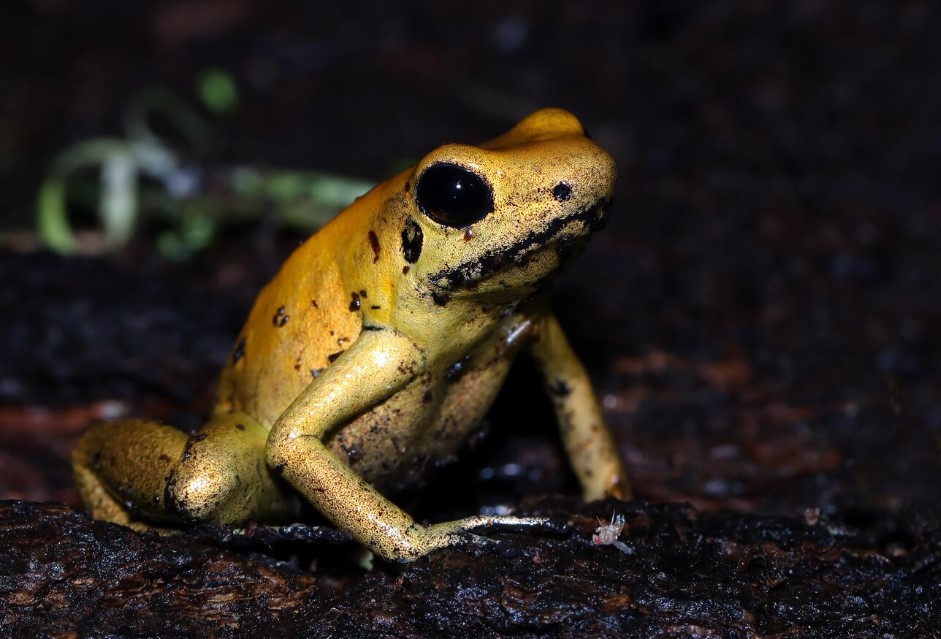
Frog Life Cycle
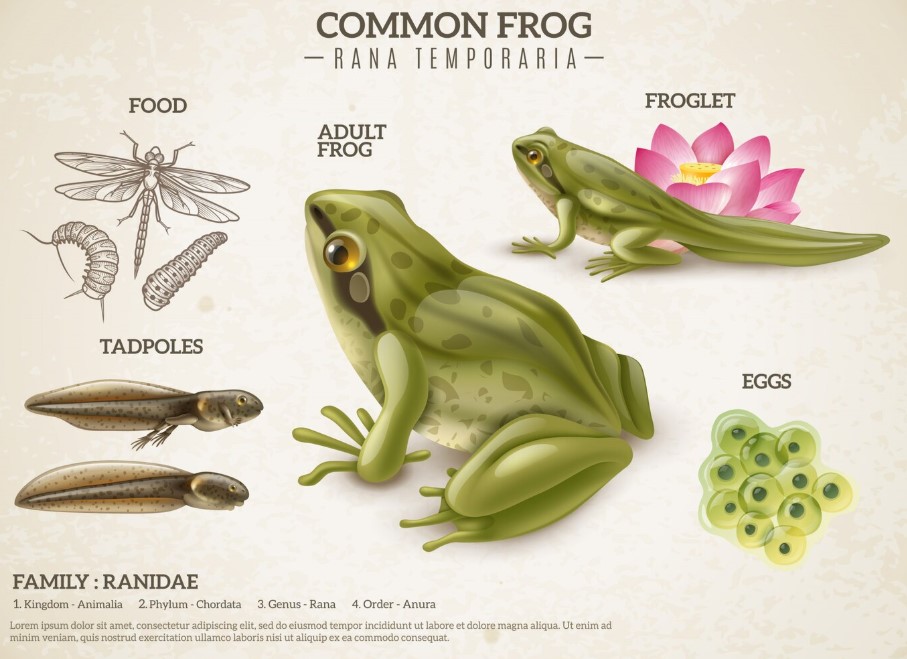
The life cycle of a frog is a quite interesting. As mentioned previously amphibians undergo a metamorphosis, and frogs showcase this process quite nicely. There are four stages that a frog will undergo to become, well, a frog. Depicted in the photo to the left, a frog will being as an egg, then tadpole, froglet, and it’s final form an Adult Frog. This process typically occurs in a short time span
Stage 1: Embryo
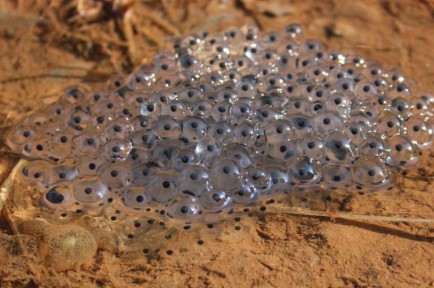
When a frog egg is laid it will be in a body of water. It is important to know that there will never be a singular egg as some species of frogs can lay up to 4,000 eggs per birth. The egg will be soft due to its high content of moisture and also acts as a defense mechanism to defend against any curious predators. In turn the texture of the egg also acts as nutrients for the embryo, as it allows it to gain nutrients from it.
Stage 2: Tadpoles
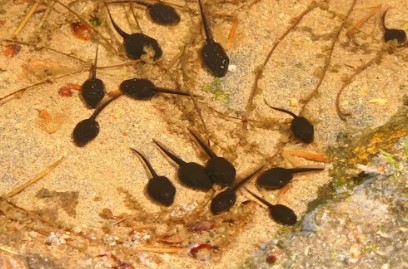
At the beginning of a tadpoles life they will stay closely to aquatic plants and grass; they can not fully migrate to land since they still require water and can not survive on land at this exact point. The main food source of a tadpole will contain small vegetation, such as the plants they are residing next to.
Tadpoles are actually quite active and are always moving. The gills that have already developed on them allow them to breath underwater and give them the ability to properly swim.
After about 14 weeks more physical changes appear where the frog can then develop their hind legs and a tail. During this process on the outside, internally their organs such as lungs will being to form. It will take about 14 weeks for the frog to develop into a proper froglet
Stage 3: Froglets
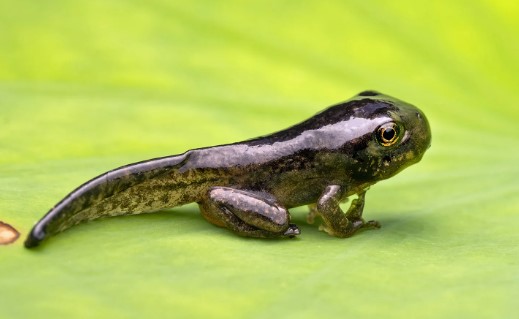
Being a froglet means that there are now fully formed and functional limbs and even a dissipating tail; this is because the nutrients from the tail in the previous stage are being used. Now instead of being confined to the water, the froglet is able to explore land! This means that their diet also begins to change as they are no longer feeding off of small vegetation. A sticky tongue forms allowing for bugs and various insects to become an optimal meal choice for these slimy friends.
Stage 4: Adult Frog
The transition from a froglet to an adult frog is not a short one and instead takes about four months for it to be fully completed. Already diverted from the necessity of need the water as their primary home, frogs need to still occasionally dunk themselves in, as an assurance that they wont dry out. Additionally, the lifespan of a frog after this stage can widely vary due to their environment, such as anywhere from one to twelve years.